
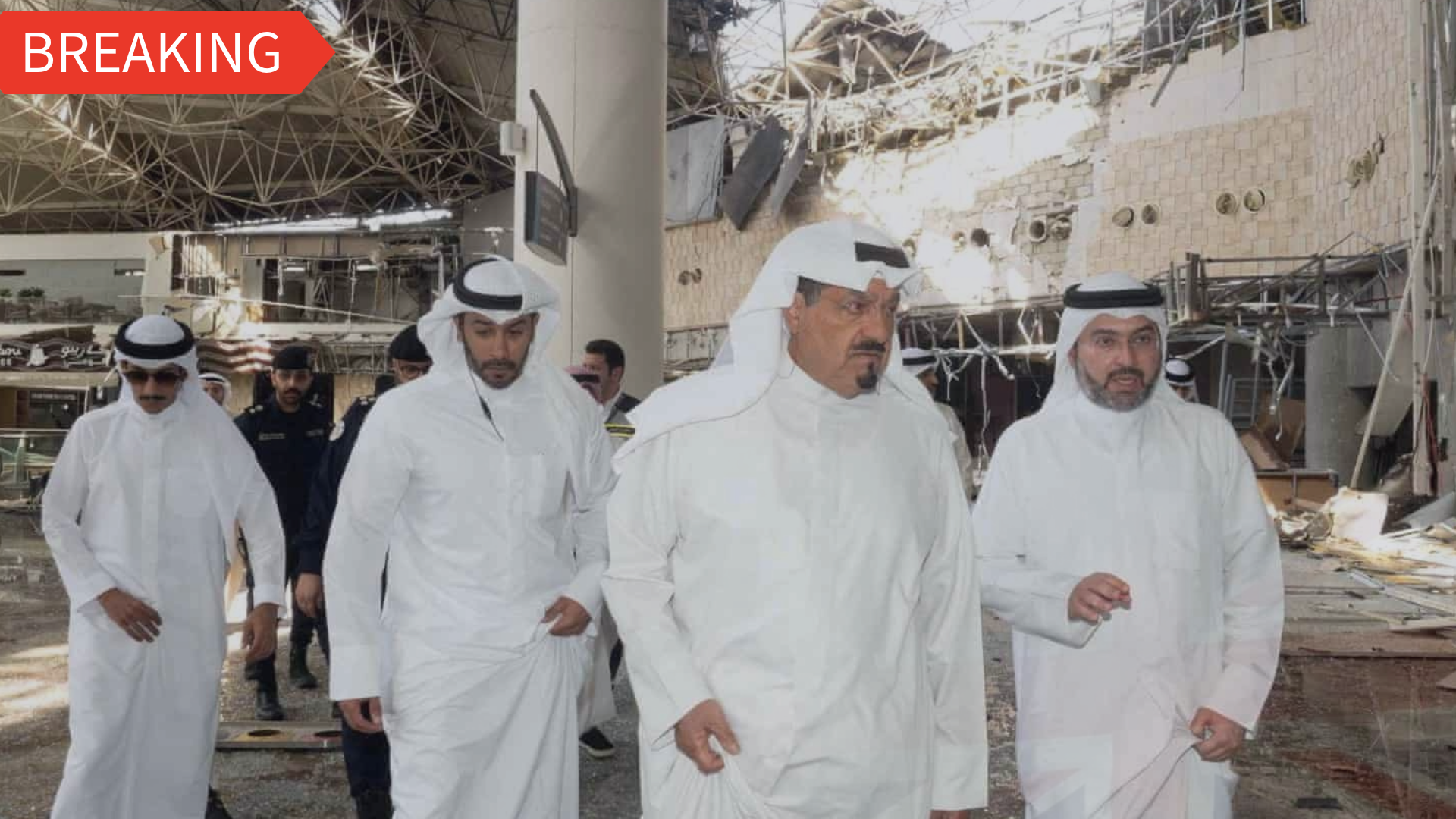
The Middle East is facing a dangerous new escalation after Iran launched missile and drone strikes against Kuwait and Bahrain, raising fears that a fragile ceasefire between Tehran and Washington could be on the verge of collapse.
Kuwaiti officials confirmed that Iran targeted Kuwait International Airport, causing significant damage to a passenger terminal. At least one person was killed, and dozens more were injured in the attack, which temporarily disrupted airport operations and sent shockwaves across the Gulf region. Iranian officials described the assault as retaliation for recent American military actions against Iranian targets.
At the same time, Bahrain reported that its air defence systems, supported by American forces, successfully intercepted multiple Iranian missiles and drones before they could reach their targets. Iranian state-linked sources claimed the attacks were aimed at military facilities connected to the United States presence in the Gulf, including assets linked to the US Fifth Fleet.

The strikes mark one of the most serious breaches of the ceasefire that has largely held since April. The latest round of violence follows reports that US forces carried out what Central Command described as “self-defence strikes” against Iranian military facilities after Tehran launched missiles and drones toward American positions in the region.
Behind the scenes, concern is growing in Washington. Reports suggest President Donald Trump has privately warned senior officials that the ceasefire agreement with Iran could effectively be over if Iranian attacks result in the deaths of American service personnel. While Trump has continued to express hope that negotiations can produce a longer-term settlement, he has also made clear that further attacks on US forces would trigger a much stronger response.
The attacks have sparked intense debate across social media, with users on X and Facebook expressing fears that the region is drifting toward a wider conflict. Energy analysts are also warning that continued instability around the Persian Gulf and Strait of Hormuz could place further pressure on global oil supplies and fuel prices, with potential consequences for economies around the world.

For now, diplomatic efforts continue behind closed doors. However, with missiles flying across the Gulf once again and both sides exchanging military strikes, hopes of a lasting peace appear increasingly fragile. Many observers now fear that a single miscalculation could drag the region back into a much larger confrontation.