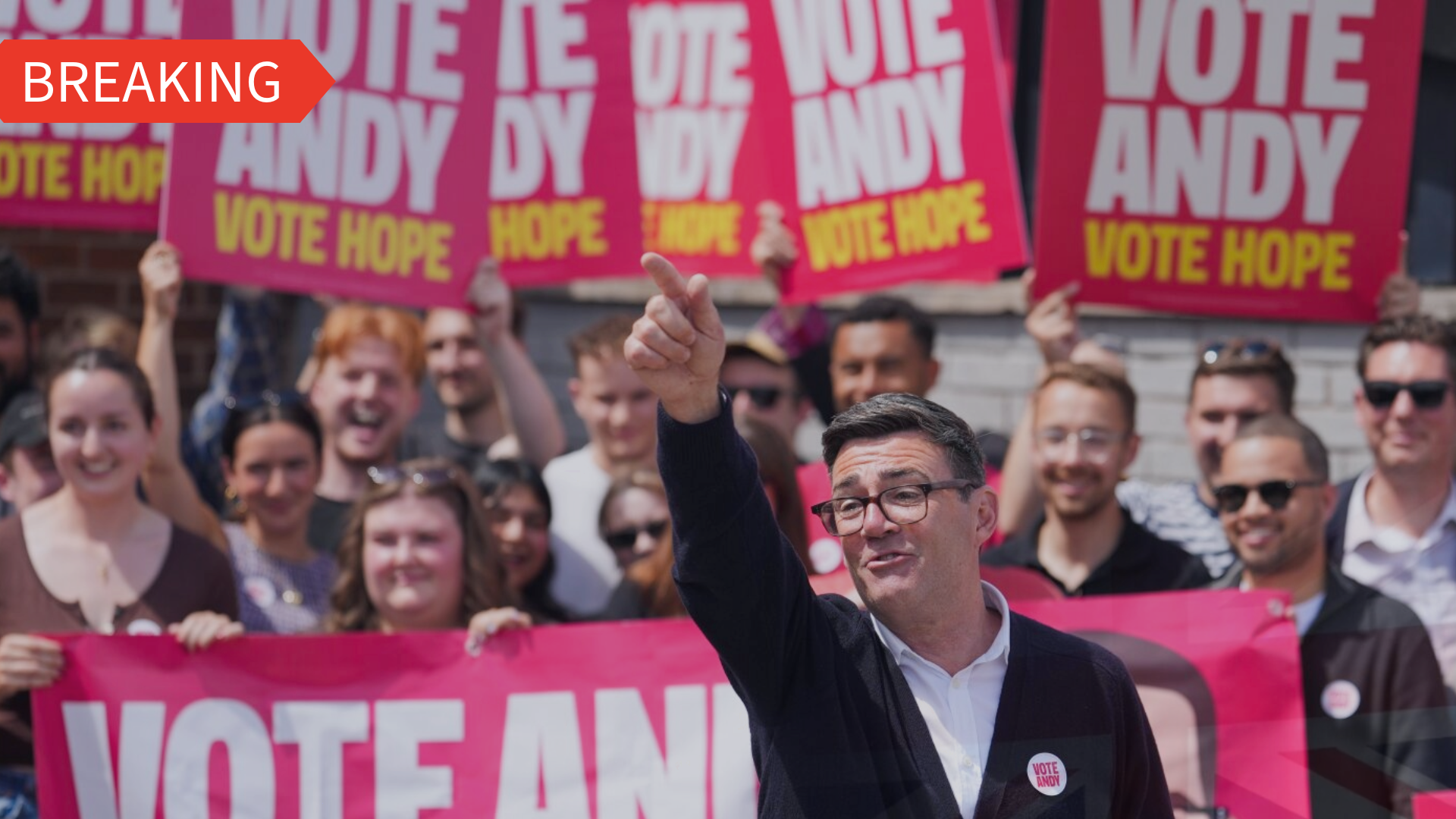
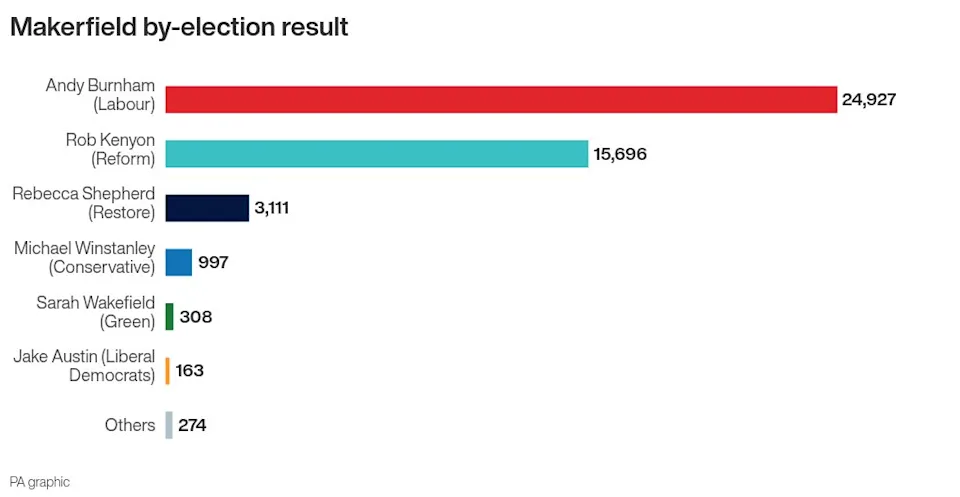
The former Labour cabinet minister and Manchester mayor swept to victory in the northwest England constituency with 24,927 votes, a majority of 9,231 over Reform UK candidate Robert Kenyon. The result, which came in the early hours of Friday morning, has sent shockwaves through Westminster and dramatically escalated pressure on the embattled Prime Minister.
In his victory speech, Burnham declared that Labour had a “final chance to change” and that the result could prove to be a “turning point” for British politics.
The Result in Numbers
Burnham’s victory was emphatic. The “King of the North,” a moniker he has earned during his years as Greater Manchester’s directly elected mayor, secured a commanding majority. Turnout stood at 58.71%, a significant increase of 6.31 percentage points.
Full result breakdown:
- Andy Burnham (Labour) – 24,937 (54.82%)
- Robert Kenyon (Reform UK) – 15,696 (34.51%)
- Rebecca Shepherd (Restore) – 3,111 (6.84%)
- Michael Winstanley (Conservative) – 997 (2.19%)
- Sarah Wakefield (Green) – 308 (0.68%)
- Jake Austin (Liberal Democrats) – 163 (0.36%)
Labour’s vote share increased by 9.62 percent, defying national trends that have seen the party suffer heavy losses in recent local elections. The swing from Reform to Labour stood at 3.45 percent.
‘A Final Chance to Change’
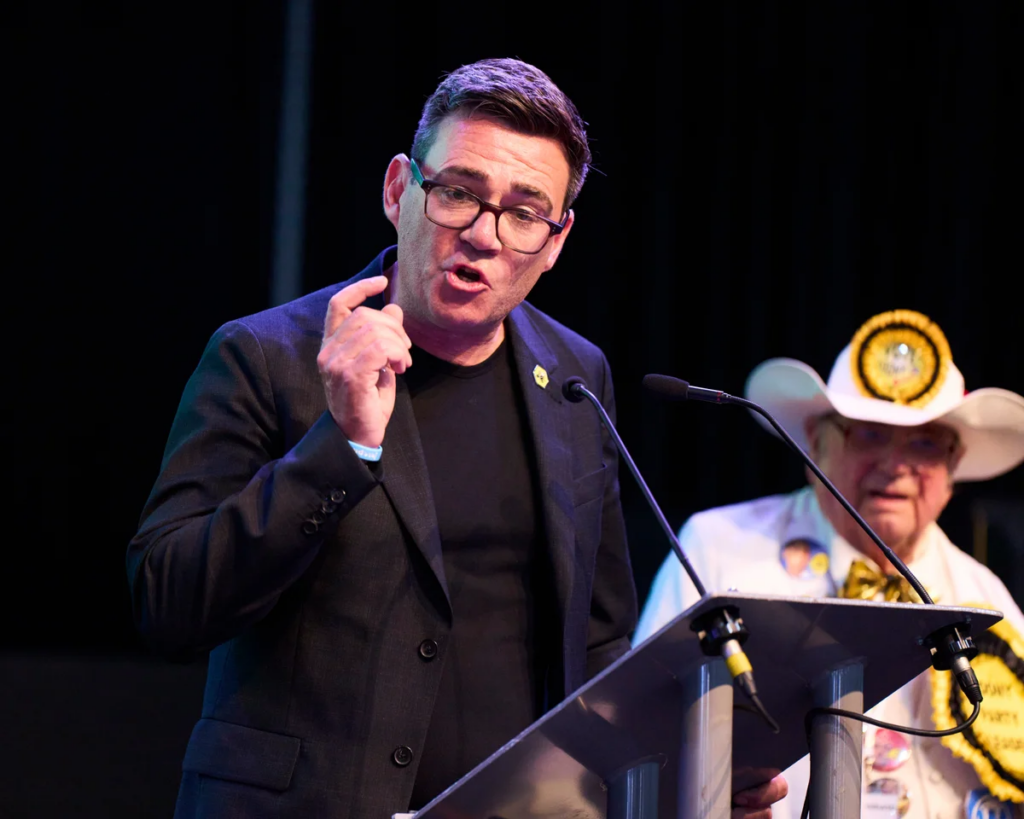
Addressing supporters after the count, Burnham did not hold back in his message to his own party.
“Everyone knows that politics isn’t working. Everyone can feel that the country isn’t where it should be. Tonight could, just could, be the turning point.”
In a direct appeal to Labour MPs, he added:
“I do say to my own party: this is a final chance to change. This is what people said directly to me on the hundreds of doorsteps that I stood on. We must hear it, we must act upon it and we must get it right. There will be no second chance.”
Burnham, who served as a Labour MP for almost 16 years and was a minister in Gordon Brown’s government, gave up the Greater Manchester mayoralty to contest the seat. The by-election was triggered when former Makerfield MP Josh Simons stepped aside specifically to allow Burnham to return to Westminster and mount a challenge against Starmer.
What Happens Next?
Burnham’s victory clears the biggest procedural hurdle to any leadership challenge: under Labour rules and parliamentary convention, only sitting MPs can lead the party and become Prime Minister.
Now that he has secured his return to the House of Commons, Burnham is eligible to formally challenge Starmer. However, there are several paths this could take:
Scenario 1: Starmer Steps Aside
Burnham’s allies – including former cabinet minister Louise Haigh – have urged Starmer to set out an “orderly and managed transition” of power. If the Prime Minister agrees to step down, Burnham could become leader without a contested election.
Scenario 2: A Formal Leadership Contest
Under Labour Party rules, any challenger must secure the backing of 20 percent of Labour MPs – currently 81 lawmakers – to trigger a contest. Reports suggest Burnham already has the support needed.
Scenario 3: Another MP Triggers the Contest
Former health secretary Wes Streeting has already signalled he would be “prepared” to trigger a leadership contest as early as next week.
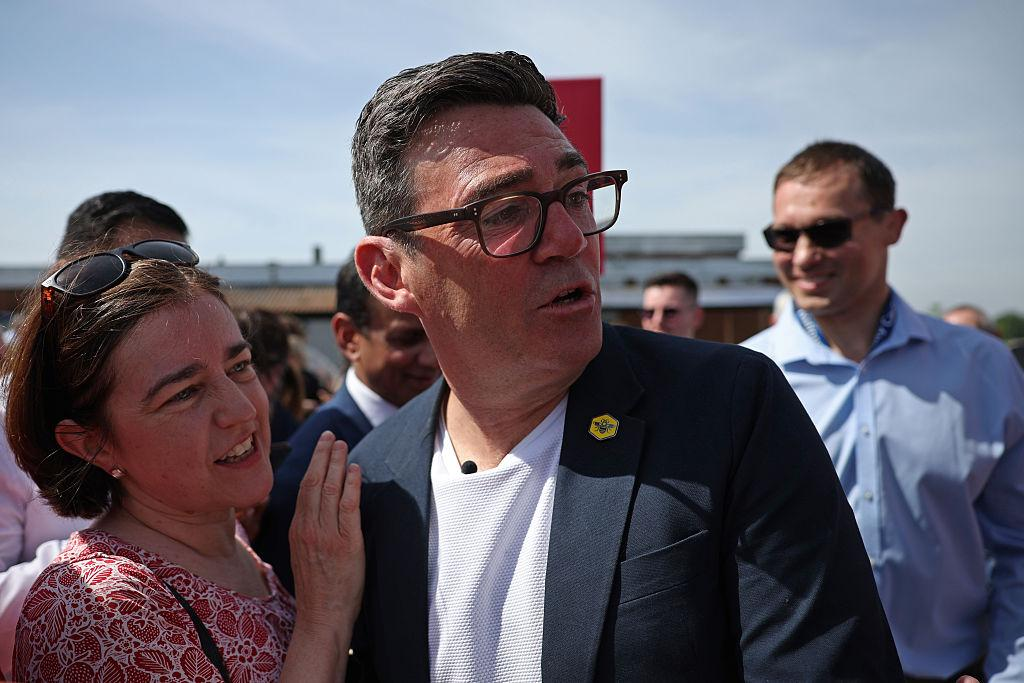
Burnham is not expected to launch an immediate challenge, with sources suggesting he hopes Starmer will “conclude that he has to give up the keys to No 10”.
Starmer’s Response
The Prime Minister, who has repeatedly insisted he will not resign and will fight any leadership challenge, congratulated Burnham on social media:
“Congratulations, @AndyBurnhamGM, Labour’s new MP for Makerfield. Voters chose Labour’s campaign of hope and optimism over division and hate.”
But behind the public congratulations, the pressure on Starmer is immense. The Prime Minister has faced repeated calls to resign since Labour’s disastrous local election results in May, and his position is now more precarious than ever.
According to the BBC’s chief political correspondent, Starmer now faces a “grave and imminent threat” to his position.
Starmer is reported to have amassed a war chest to fund his campaign to fight any leadership challenge, with fundraising having ramped up in recent days and total pledges running into six figures.
Reform UK’s ‘Disappointing Morning’
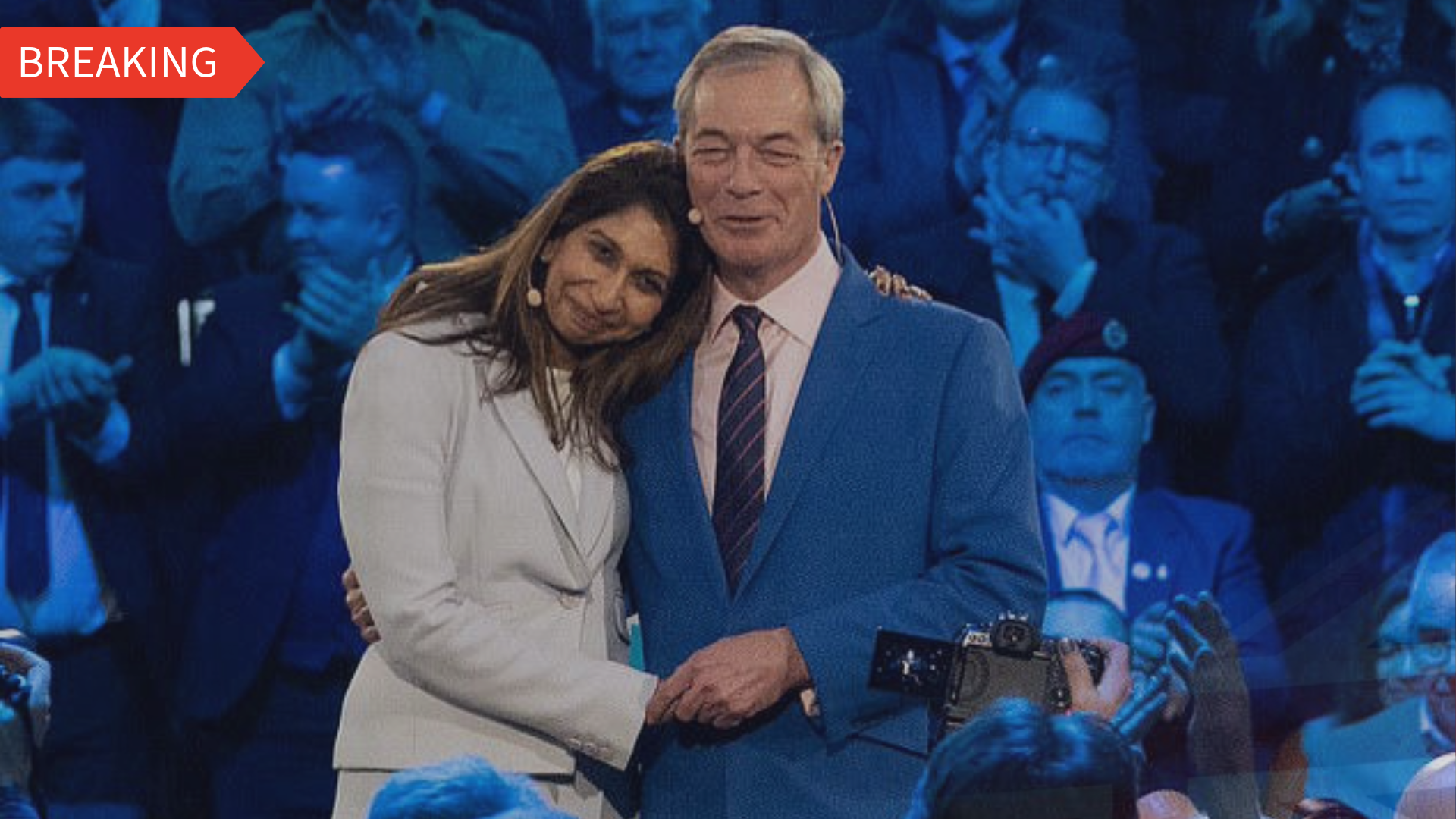
For Nigel Farage’s Reform UK, the result was a bitter blow. The party, which has been surging in national polls and made sweeping gains in May’s local elections, came in a distant second.
Farage described it as a “disappointing morning” for his party, acknowledging that the result was “dramatic” for Burnham – one “nobody could quite see coming”.
However, Reform’s 34.5 percent vote share – up from the party’s 2024 performance – suggests the right-wing populist party remains a significant force in British politics.
Social Media Reaction
The result has dominated discussion across social media platforms, with political commentators and the public weighing in on what it means for the future of British politics.
On Twitter/X, the hashtag #Makerfield trended throughout the night, with users debating Burnham’s prospects. Starmer’s congratulatory tweet drew thousands of replies, many from Labour supporters urging the Prime Minister to step aside.
On Reddit, Burnham had previously engaged with voters through an “Ask Me Anything” session during the campaign. Following the result, political subreddits were flooded with analysis, with many users pointing to the scale of Burnham’s victory as evidence of Starmer’s declining authority.
Political commentators noted that Burnham’s win demonstrates his unique ability to hold Labour voters while fending off Reform’s challenge – a feat that has eluded Starmer nationally.
The Greater Manchester Mayoralty
Burnham’s return to Westminster has automatically triggered an election to find a new metro mayor for Greater Manchester. Sitting MPs cannot serve as regional mayors, as the role incorporates the role of Police and Crime Commissioner.
The most likely date for the Greater Manchester vote is 30 July, with the cost of finding a new mayor estimated at approximately £4.7 million.
Analysis: What This Means for British Politics
The Makerfield by-election will be remembered as one of the most consequential in modern British political history.
Burnham, 56, has been Mayor of Greater Manchester for the best part of a decade since leaving Parliament in 2017. During that time, he has built a reputation as a formidable regional leader, winning three successive mayoral elections – including a 2024 landslide with 63.4 percent of the vote.
His victory in Makerfield was complicated by the fact that he was running for a Labour government that is “widely loathed” nationally. Yet he managed to walk a political tightrope, promising constituents that electing him would mean ousting the Prime Minister.
The scale of his win, increasing Labour’s vote share in a seat where Reform made sweeping gains just last month, sends a powerful message to Labour MPs: Burnham can win where Starmer cannot.
As one commentator put it: “Burnham’s win allows him to argue he can beat Reform anywhere”.
What MPs are Saying
Culture Secretary Lisa Nandy welcomed Burnham’s return, saying: “What Andy’s shown here is that there is something that he brings, a willingness to go out and fight for the change that people need, to take on any system and any person who stands in the way.”
Former cabinet minister Louise Haigh urged Starmer to “do what’s best for both the country and the Labour Party”.
Wes Streeting, who has already indicated he would stand in any leadership race, described himself as the “underdog” in a contest against Burnham.
The Road to No 10
Burnham has already picked out his desired residence: 10 Downing Street.
Whether he gets there depends on the coming days and weeks. Parliament goes into recess on July 16, meaning any formal challenge would likely need to be declared before then if Burnham wants to move quickly.
Alternatively, he could wait until after the summer, using the time to campaign for the Labour candidate to replace him as Greater Manchester mayor and build relationships with newer MPs.
Either way, British politics has entered a new and uncertain phase. As Burnham himself put it: “This result will bring about a country that works fairly for everywhere and for everybody.”
The question now is whether that country will have a new leader to match.