

Communities Secretary Steve Reed has announced a comprehensive suite of policy interventions designed to eliminate corporate profiteering within the children’s social care sector and alleviate the severe pressures on the temporary housing market across London boroughs.
Capping Profits in Children’s Social Care
The structural reforms target private equity firms and multinational corporations currently operating within the taxpayer-funded social care market. During a recent policy address, Reed outlined the financial strain placed on local authorities, noting that private providers generate an average annual profit of £45,000 per child placed in their care. The government categorized this profit margin as excessive and exploitative, asserting that it pushes local councils toward financial insolvency.

To rectify the broken placement market, the Ministry of Housing, Communities and Local Government, in coordination with the Department for Education, will introduce statutory profit caps for private children’s care providers. The administration has also indicated a willingness to publicly identify companies that extract disproportionate profits from state-funded welfare services. The reforms aim to redirect financial resources toward early family intervention programs and expand local fostering capacity, fundamentally reducing the state’s reliance on costly private residential care.
Emergency Reforms for London’s Housing Market
Concurrently, the government introduced emergency structural reforms to address the acute shortage of affordable housing and the over-reliance on temporary accommodation in the capital. Working in partnership with the Mayor of London, Sadiq Khan, Reed unveiled a targeted legislative package to accelerate housing development across every London borough.
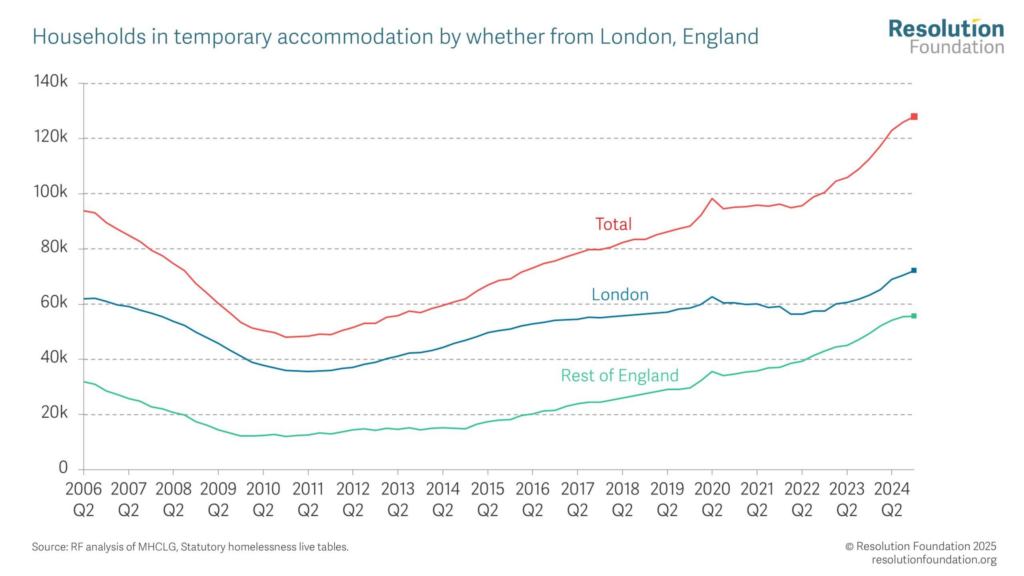
The housing initiative introduces a fast-track planning route specifically for development sites that commit to delivering a minimum of 20 percent affordable housing. Additionally, the government will provide temporary relief from the Community Infrastructure Levy—charges typically paid by developers—for eligible schemes that meet or exceed these affordable housing targets. To further expedite construction, the legislation expands the Mayor’s executive authority to call in and review planning applications for developments of 50 homes or more if a local borough intends to refuse the project.
These synchronized policy interventions represent a direct effort to stabilize local government finances by capping predatory practices in the care sector while utilizing executive planning powers to increase the supply of permanent, affordable housing for vulnerable families currently trapped in temporary accommodation.