
Healthcare professionals within the National Health Service (NHS) could face strict prohibitions on wearing political symbols while at work, including pro-Palestinian and pro-Israeli insignia, following the recommendations of an official government-commissioned review.
The rapid review into antisemitism and other forms of racism across the health service was conducted by Lord John Mann, the government’s independent adviser on antisemitism. The investigation was initiated following an increase in reported antisemitic incidents, including Jewish patients expressing reluctance to seek treatment due to safety concerns, and high-profile cases of medical practitioners facing regulatory action over racist or antisemitic comments made online.
The resulting report recommends a comprehensive update to NHS England’s national uniform guidance. The proposed restrictions would explicitly prohibit staff from wearing clothing or badges that carry political messages. Furthermore, the review advises that staff should be barred from wearing their official NHS uniforms or displaying NHS logos and branding while participating in political rallies or protests.

In broadcast interviews discussing the findings, Lord Mann emphasized that maintaining strict political neutrality is essential for patient confidence and comfort. He specifically cited badges stating “I love Palestine” or “I love Israel” as examples of symbols that should be excluded from clinical settings. However, he noted that it would be up to individual NHS trusts to determine policies regarding other potential identifiers, such as LGBTQ+ Pride badges or trade union symbols.
While medical leaders have strongly endorsed the review’s primary objective to eradicate racism and antisemitism within the health sector, the specific proposals regarding workwear have generated immediate pushback.
The British Medical Association (BMA) labeled the recommendations regarding political identifiers as “deeply concerning.” Dr. Emma Runswick, the BMA’s deputy chair of council, warned that implementing a “blanket ban” on all symbols that could be construed to express a belief would represent a significant overreach.
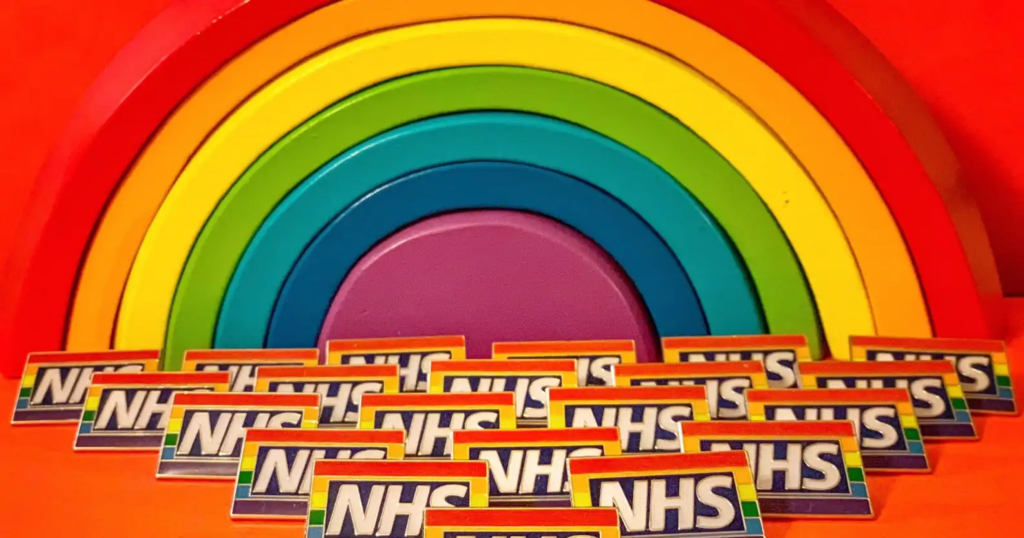
“Many symbols that could be deemed ‘political,’ such as Pride symbols, trade union or professional symbols, and the Welsh, Ukraine, and other international flags, demonstrate to patients and colleagues that we are safe, have shared languages, shared values, or are prepared to celebrate our diverse staff and patient populations,” Dr. Runswick stated. She further cautioned that allowing individual employers to decide what constitutes a “political” symbol would create inconsistencies, leaving healthcare staff without necessary clarity.
Beyond the uniform regulations, the Lord Mann review recommends rolling out mandatory, updated training for all 1.5 million NHS staff on equality, diversity, and human rights, specifically incorporating dedicated content on antisemitism and anti-Muslim hostility. The report also suggests amending primary care regulations to grant NHS England expanded authority to impose conditions on practitioners who express extremist views.
The government has indicated strong support for the review’s findings. Prime Minister Keir Starmer and Health Secretary Wes Streeting have both committed to enforcing a “zero tolerance” policy regarding discrimination within the healthcare system to restore public trust.