
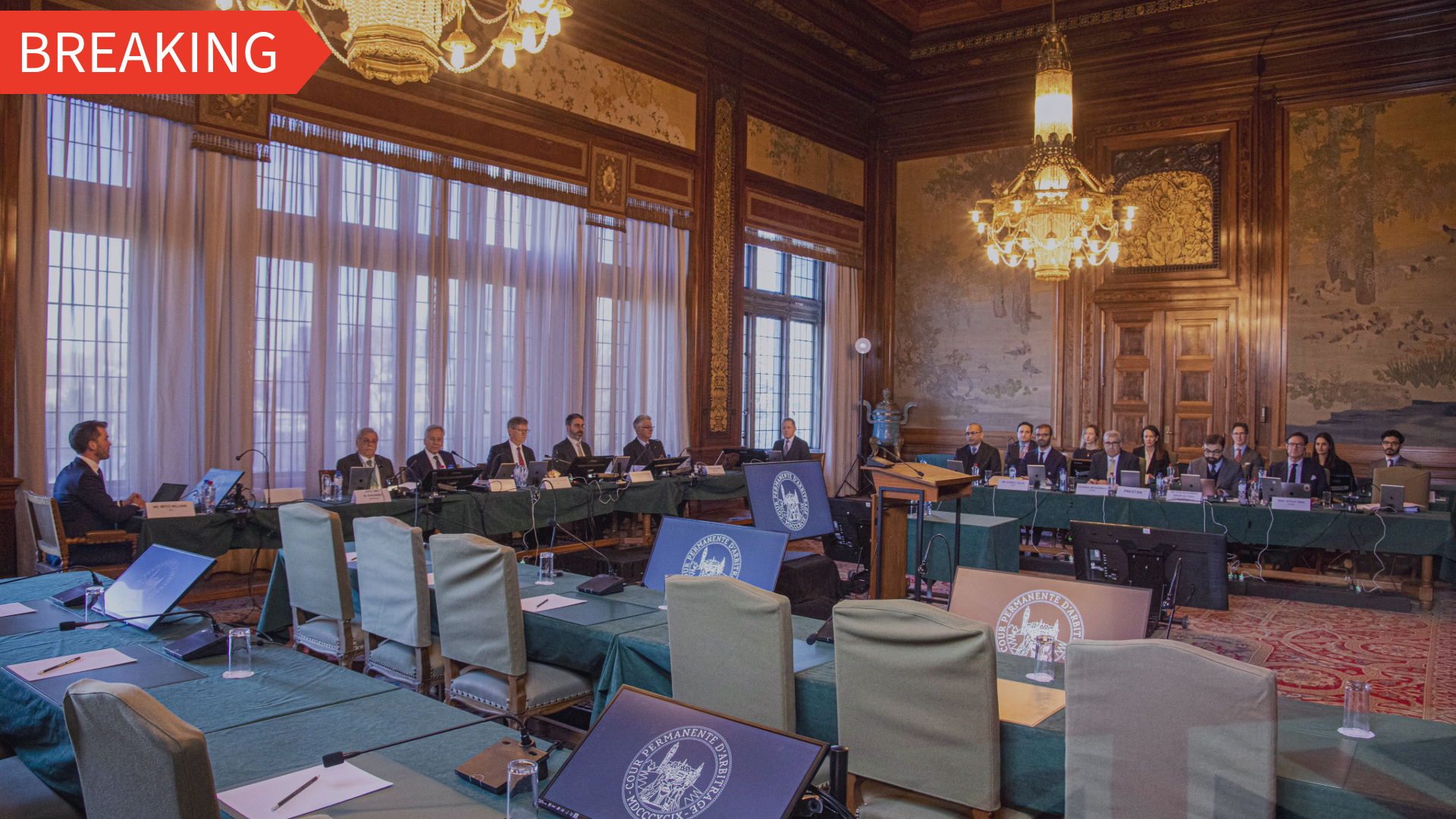
The United Kingdom has secured a major legal and political victory after an international arbitration tribunal ruled that Britain does not have to pay Rwanda more than £100 million in compensation following the collapse of the controversial Rwanda asylum scheme.
The ruling, delivered by the Permanent Court of Arbitration in The Hague, rejected all financial claims brought by Rwanda against the UK government after Labour scrapped the migrant deportation policy shortly after taking office in 2024. The decision means British taxpayers will avoid paying tens of millions of pounds that Kigali had argued were still owed under the agreement.

The case centred on the highly controversial policy introduced by the previous Conservative government, which aimed to send certain asylum seekers who arrived illegally in Britain to Rwanda for processing and potential resettlement. The plan became one of the most divisive immigration policies in modern British politics and faced years of legal challenges before eventually being abandoned.

After the scheme was scrapped, Rwanda launched arbitration proceedings, arguing that Britain had breached the terms of the agreement and still owed two annual payments worth £50 million each, alongside additional compensation claims. Kigali’s total claim exceeded £100 million.
However, the three-judge panel found that diplomatic exchanges between both governments after the cancellation effectively established that no further payments would be required. The tribunal ruled in favour of Britain on all major grounds and rejected Rwanda’s financial demands.
A UK government spokesperson welcomed the decision, saying Britain had “robustly defended its position” and that the court had now confirmed the country was not liable for the disputed payments.
The judgment closes one of the most expensive and politically controversial chapters in Britain’s recent immigration debate.
The Rwanda policy was originally promoted as a deterrent against illegal Channel crossings, with ministers arguing that relocating asylum seekers to East Africa would discourage migrants from attempting dangerous small boat journeys across the English Channel. Critics, however, described the plan as unworkable, unethical, and legally flawed from the outset.

Britain’s Supreme Court ultimately ruled the scheme unlawful before Labour formally scrapped it after winning the 2024 General Election. Prime Minister Keir Starmer famously described the policy as “dead and buried” shortly after entering Downing Street.
Despite the enormous political attention surrounding the policy, only four migrants were ultimately relocated to Rwanda, all of whom travelled voluntarily rather than through forced deportation. Meanwhile, government figures show approximately £290 million had already been paid to Rwanda before the scheme collapsed.
The overall cost of the policy remains heavily debated.
Critics have repeatedly pointed to estimates suggesting more than £700 million was spent on legal fees, accommodation arrangements, administration, enforcement planning, and infrastructure connected to the project. Supporters of the original policy argue that legal challenges prevented the scheme from operating as intended and therefore prevented any meaningful assessment of its effectiveness.

The ruling has triggered fierce reactions across social media.
On X, Facebook and Reddit, immigration debates immediately resurfaced as users argued over whether the judgment represented a victory for taxpayers or a reminder of the enormous sums already spent on the abandoned programme. Many commenters described the decision as preventing another costly payout, while others focused on the hundreds of millions already committed to the scheme before it was cancelled.
The case also arrives during renewed political focus on Channel crossings.
With small boat arrivals continuing to dominate immigration discussions, ministers remain under pressure to demonstrate that alternative border security measures can succeed where previous approaches failed. Labour has instead focused on targeting smuggling gangs, strengthening enforcement operations, and increasing international cooperation with European partners.
For Rwanda, the decision marks the end of a significant legal battle, although officials indicated they respected the tribunal’s ruling while acknowledging the complexity of the dispute. One arbitrator reportedly dissented on part of the financial claim, highlighting continuing disagreements surrounding the interpretation of the agreement.
For the British government, the outcome removes the immediate threat of another major financial liability linked to the Rwanda plan.
For taxpayers, it avoids a potential £100 million bill.
And for Britain’s immigration debate, the ruling closes one legal chapter while leaving the wider political argument over border control, asylum policy, and Channel crossings as intense as ever.