
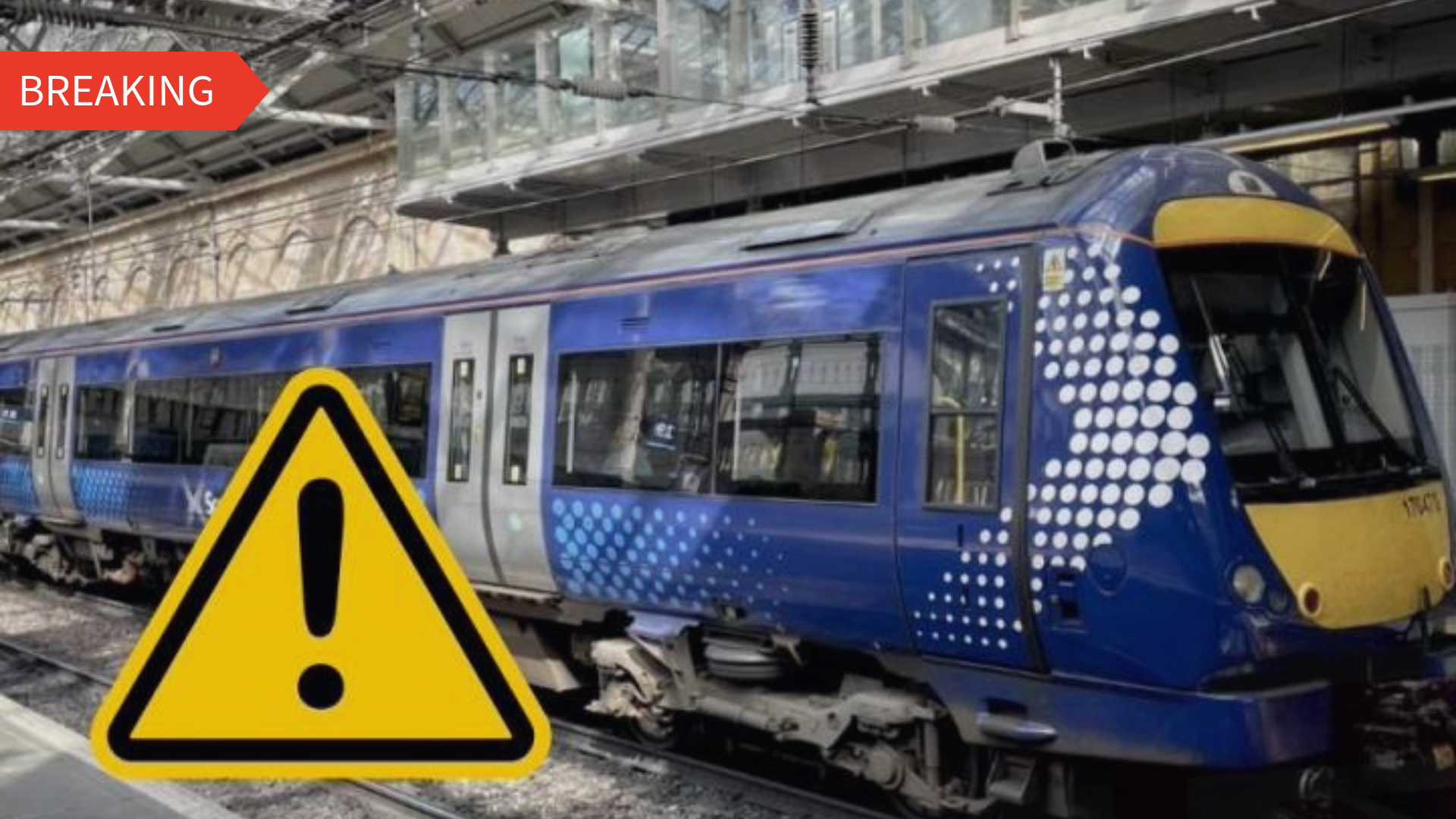
Fatal Incident Triggers Major Disruption
A person has died after being struck by a train near Hillington East station in Glasgow, prompting a large emergency response and widespread disruption across the rail network.
Emergency services, including paramedics and British Transport Police, were called to the scene shortly after 8:40 am. The individual was pronounced dead at the scene.
Police confirmed the incident is not being treated as suspicious, and a report will be submitted to the Procurator Fiscal.
The incident led to significant disruption on key commuter routes, particularly those running between Glasgow Central and Paisley.
Train operators warned that multiple services would be cancelled, delayed, or revised, affecting routes to Ayr, Largs, Gourock, and other destinations across the west of Scotland.
For many commuters, the disruption extended well into the day, with delays cascading across interconnected lines.
Rail networks in major cities like Glasgow are highly interconnected, meaning a single incident can quickly affect multiple routes.
Experts note that incidents involving fatalities require immediate suspension of services while emergency and investigative procedures are carried out, often leading to widespread delays.
This can create a ripple effect across the wider network, particularly during peak travel hours.
For passengers, the disruption led to missed connections, overcrowded platforms, and longer journey times.
While many commuters recognise the seriousness of such incidents, repeated disruptions, whether due to accidents, infrastructure issues, or external factors, have contributed to a growing sense of frustration.
Recent weeks have seen multiple transport-related disruptions in Glasgow, reinforcing concerns about reliability.
The incident has once again highlighted broader questions about the resilience of urban transport systems.
Modern rail networks are designed for efficiency, but that efficiency can come at the cost of flexibility when unexpected events occur.
Even a single incident can strain the system, exposing how limited redundancy can lead to citywide disruption.
Authorities emphasise that safety procedures must take priority in situations like this.
Rail services cannot resume until the scene has been secured and investigations are complete, ensuring the safety of both passengers and staff.
However, the challenge remains how to maintain continuity of service while responding to such events.
Services have gradually resumed, though some delays may continue as timetables return to normal.
Investigations into the incident are ongoing, with further details expected to be released in due course.