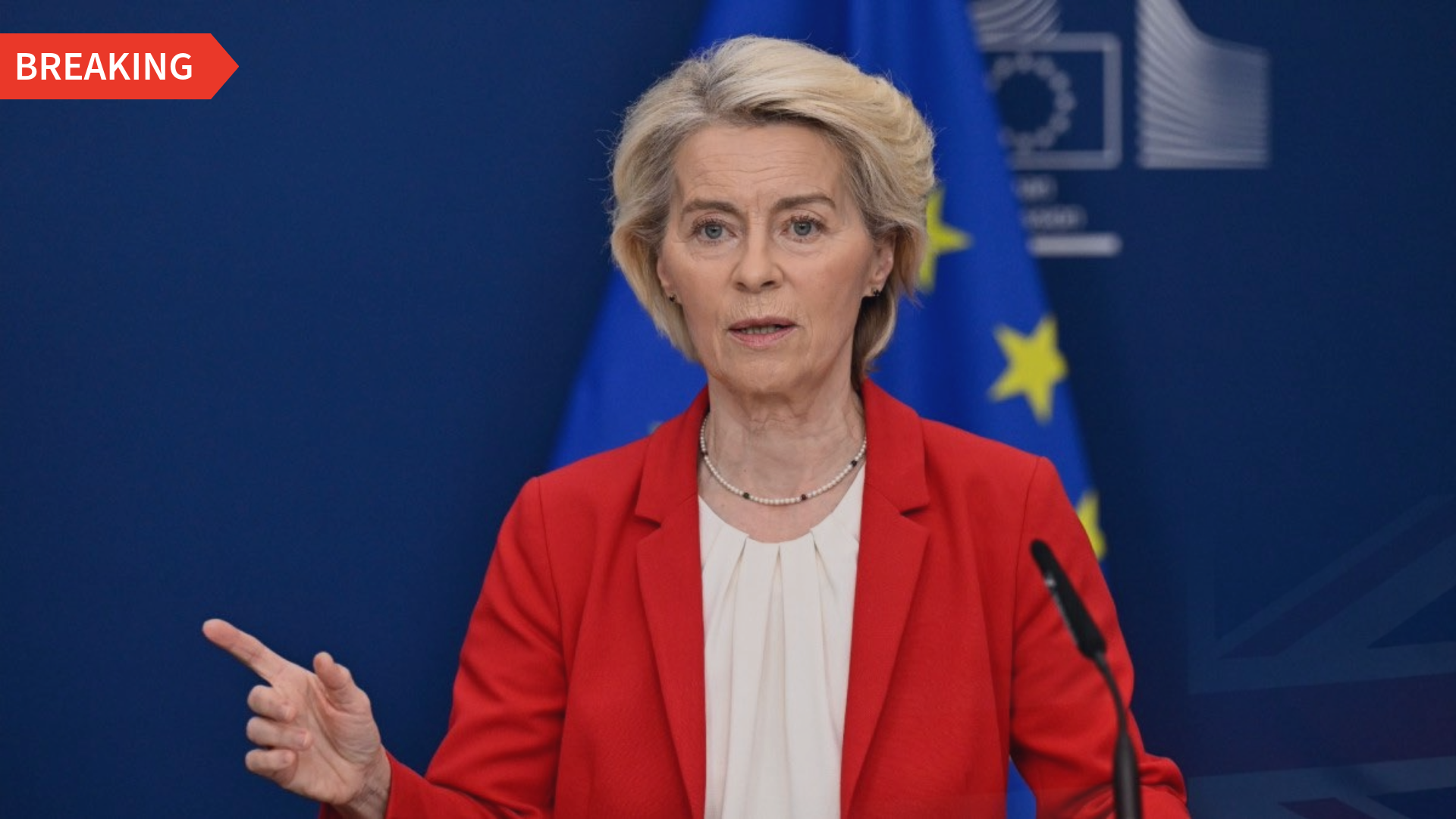
European Commission President Ursula von der Leyen has sparked a diplomatic row after suggesting Europe must reduce external influence from powers including Russia, China, and Türkiye.
Speaking at an event in Hamburg marking the 80th anniversary of the German newspaper Die Zeit on Sunday, 20th April 2026, she declared:
“We must succeed in completing the European continent so that it is not influenced by Russia, Türkiye, or China.”
She framed EU enlargement as a geopolitical necessity, not just a bureaucratic process. She argued that Europe must “think bigger and more geopolitically” to finish building a united continent that is free from external spheres of influence.
Her comments were framed as part of a broader argument for expanding the EU, particularly towards eastern and south-eastern Europe.
Von der Leyen argued that the EU’s previous economic model, reliant on Russian energy, Chinese manufacturing, and US security guarantees, was no longer viable.
She said enlargement, including the possible accession of countries such as Ukraine, Moldova, and those in the Western Balkans, should now be seen as a strategic priority.
The aim, she suggested, is to ensure that external powers do not fill geopolitical “vacuum spaces” in Europe.
The remarks align with her long-standing vision of a more assertive, strategically independent European Union.
However, the inclusion of Turkey, also known as Türkiye, alongside Russia and China prompted swift criticism. Türkiye is a member of NATO and has been an official EU candidate country since 1999.
Critics, including Turkish officials and commentators, described the comparison as inappropriate and diplomatically damaging. Some argued it undermined Türkiye’s long-standing role as both a regional partner and a candidate for EU membership.
The European Parliament’s rapporteur on Türkiye, Nacho Sánchez Amor, also publicly criticised the remarks.
By Monday, the European Commission sought to ease tensions, issuing clarifications on the president’s comments.
Officials stressed that Türkiye remains an important economic and political partner for the EU. They also emphasised that, as a candidate country, Türkiye is expected to align with EU values, particularly in regions such as the Western Balkans.
The Commission said it does not seek to “control” Türkiye’s influence, but rather to work alongside partners in maintaining regional stability.
The remarks have circulated widely on platforms such as Twitter/X, drawing a strong and varied reaction.
Online commentary has included both sharp political criticism and, in some cases, highly abusive language directed at von der Leyen, reflecting the polarised nature of the debate.
Turkish nationalists and some Islamist voices interpret this as von der Leyen actively trying to isolate Turkey geopolitically, weaken its influence in the Balkans/Western Balkans, and prepare the ground for future conflict (especially amid Turkey-Israel tensions and the broader Middle East chaos).
Posts exploding currently, explicitly claim she’s “clearing the ground for the inevitable attack on Turkiye by the Zionist axis” or “following the Zionist script to designate Turkey as the next target.”
Irish MEP Clare Daly famously called her “Frau Genocide” in the European Parliament over her Gaza stance.
Despite the controversy, analysts say the comments were not accidental.
They reflect a broader shift in EU thinking, towards using enlargement as a geopolitical tool to strengthen influence and reduce reliance on external powers.
However, the episode also highlights the diplomatic sensitivities involved, particularly when discussing countries that are both partners and candidates for membership.
The European Commission is now expected to continue efforts to manage relations with Ankara while maintaining its broader strategic agenda.